
Scanpole’s export logistics moved to Hamina in less than two months – deliveries continued without interruption
Customer case at a glance
| Customer | Scanpole Oy / Iivari Mononen Oy |
|---|---|
| Industry | Manufacture and export of wooden poles |
| Careliance’s role | Port storage, pole handling, stevedoring and implementation of the port transfer |
| Key objective | Continuity of export deliveries and assurance of handling quality |
The partnership in figures
2 months
implementation of the new storage and handling solution at the Port of Hamina.
0 delivery interruptions
export deliveries continued during the switch of ports.
2× efficiency
improvement in stevedoring efficiency over 20 years
“Careliance is a reliable partner that can respond flexibly to change while also developing pole handling methods over the long term.”
– CEO Janne Monni
The history of pole exports at Scanpole and Iivari Mononen Oy dates back to 1952. Over the decades, Finnish wooden poles have been supplied to 72 countries. The particular demands of export logistics arise from the products themselves: the poles are 6–24 metres long, vary in size and are demanding to handle.
The raw material comes from pine trees that have grown for as long as 150 years. Improper lifting or clamping can damage a product beyond repair, and a replacement pole may not be available quickly. According to Scanpole’s CEO Janne Monni, only around ten of the longest, 24-metre poles can be sourced from Finland each year.
With cargo like this, the quality of port handling has a direct impact on the reliability of the entire supply chain.
A working transport chain had to be rebuilt
When the Saimaa Canal was in use, Scanpole’s export shipments were handled through the Port of Joensuu. The short inland transport distance and the ability to deliver products by sea close to the customer’s warehouse created a cost-effective transport chain in which additional handling stages could be minimised.
After Russia’s war of aggression against Ukraine began in February 2022, the Saimaa Canal closed. Scanpole had to find a new export port quickly and arrange storage, handling and shipping for its products in a new operating environment.
Careliance played a central role in implementing an alternative solution. In less than two months, the storage and handling arrangements required for long poles were in place at the Port of Hamina. The quality requirements established in Joensuu were also met in Hamina, and Scanpole’s export deliveries continued without interruption.
Scanpole’s switch of ports showed in practice what operational flexibility and a long-term partnership mean for delivery reliability.
Stevedoring efficiency comes from the right methods
Scanpole has experience of stevedoring services at several Finnish ports, from Oulu to Hamina. When choosing a partner, the decisive factor is the overall service rather than an individual stevedoring price: handling quality, loading efficiency, delivery reliability and the ability to prevent costs caused by disruptions.
Monni estimates that stevedoring efficiency has doubled over a period of 20 years with Careliance (formerly known as Joensuun laivaus) as a partner. This development has required continuous improvements to both equipment and working methods.
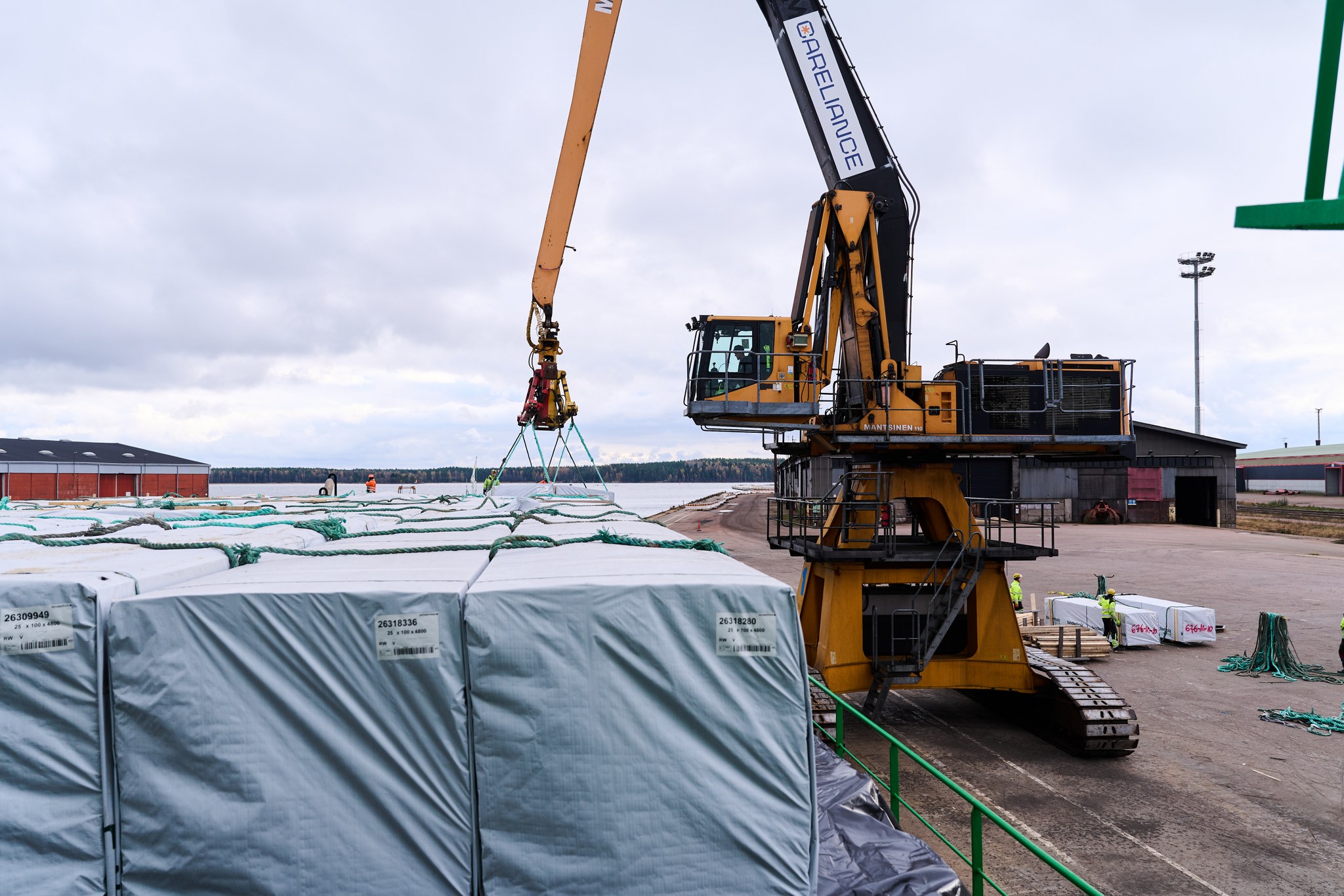
Careliance has developed pole handling methods over the long term and actively sought new technical solutions, including in cooperation with manufacturers of material handling machines.
A logistics partner’s value is evident throughout the export chain
Scanpole relies largely on waterborne transport for the main leg of its products’ journeys. Sea transport is important to the company from the perspectives of both costs and environmental impacts. At the same time, minimising the number of handling stages reduces the risk of damage to sensitive products.
In Monni’s view, Careliance’s strengths include the ability to look at port operations as part of the entire transport chain. Storage, handling and shipping must form an effective and cost-efficient whole, even when routes or other operating conditions change.